What Should a Tour Operator Website Have?

Jarod LaFalce
Co-Founder / COO of BookingTerminal
Published on: January 30, 2026 | Estimated Read Time: 6 minutes
A tour operator website doesn't need to be flashy or overbuilt — it needs to be clear, trustworthy, and easy to book from. We see a lot of operator websites that look great on the surface but quietly lose bookings because key pieces are missing or hard to use.
If you're building a new site or refining an existing one, here's what your tour operator website should have in place to both convert visitors and get found in search.
A Clear Breakdown of Your Offerings
When someone lands on your website, they should immediately understand what you offer and whether it's relevant to them. Visitors shouldn't have to guess or dig through multiple pages just to figure out what you do.
At a minimum, each offering should clearly communicate:
- what the experience is
- where it takes place
- how long it lasts
This level of clarity helps customers make faster decisions and also makes it easier for search engines to understand and rank your pages for relevant "things to do in [location]" searches.
Online Booking Software That Actually Works
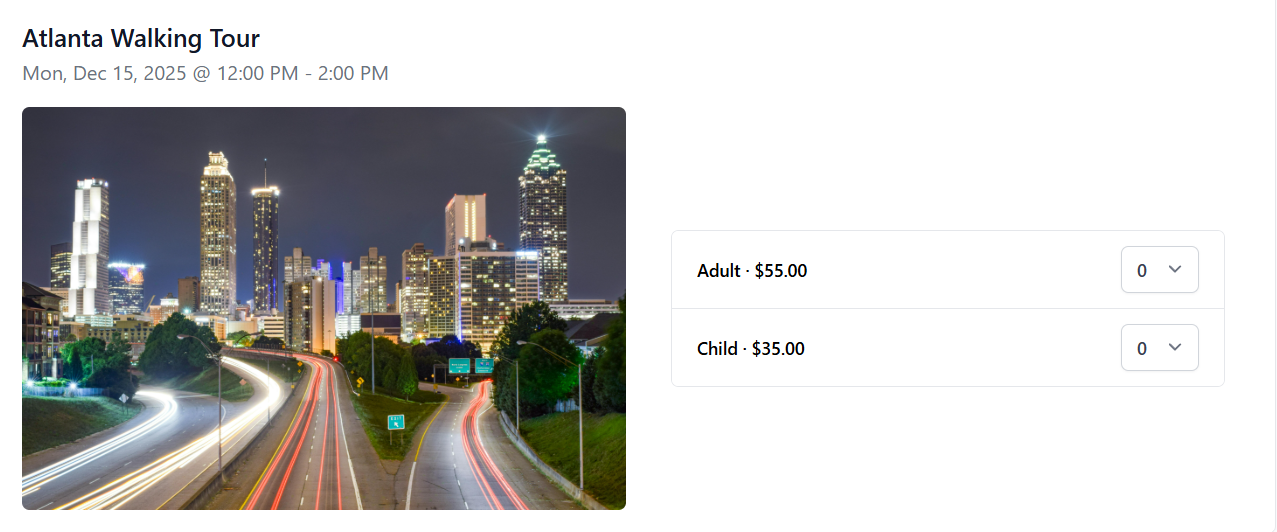
Your website should allow customers to book instantly, see real-time availability, and receive confirmation without back-and-forth emails. If your booking flow relies on manual follow-up or availability requests, you're adding friction at the most important moment.
A solid booking system should:
- reflect real-time availability
- work seamlessly on mobile
- make checkout fast and intuitive
In today's digital-first world, customers expect to book experiences the same way they book hotels, flights, and reservations — quickly, online, and without uncertainty. If they can't book right away, they're far more likely to leave your site and book elsewhere. Booking software will increase your sales while saving you time.
Mobile-First Design
Most travelers browse and book tours on their phones, often while already in-destination. A mobile-first site isn't just a nice-to-have — it's essential.
Mobile-first design means:
- pages load quickly
- buttons are easy to tap
- booking doesn't feel cramped or confusing
This improves both conversion rates and search visibility, since mobile performance is a key ranking factor.
High-Quality Photos That Set Expectations
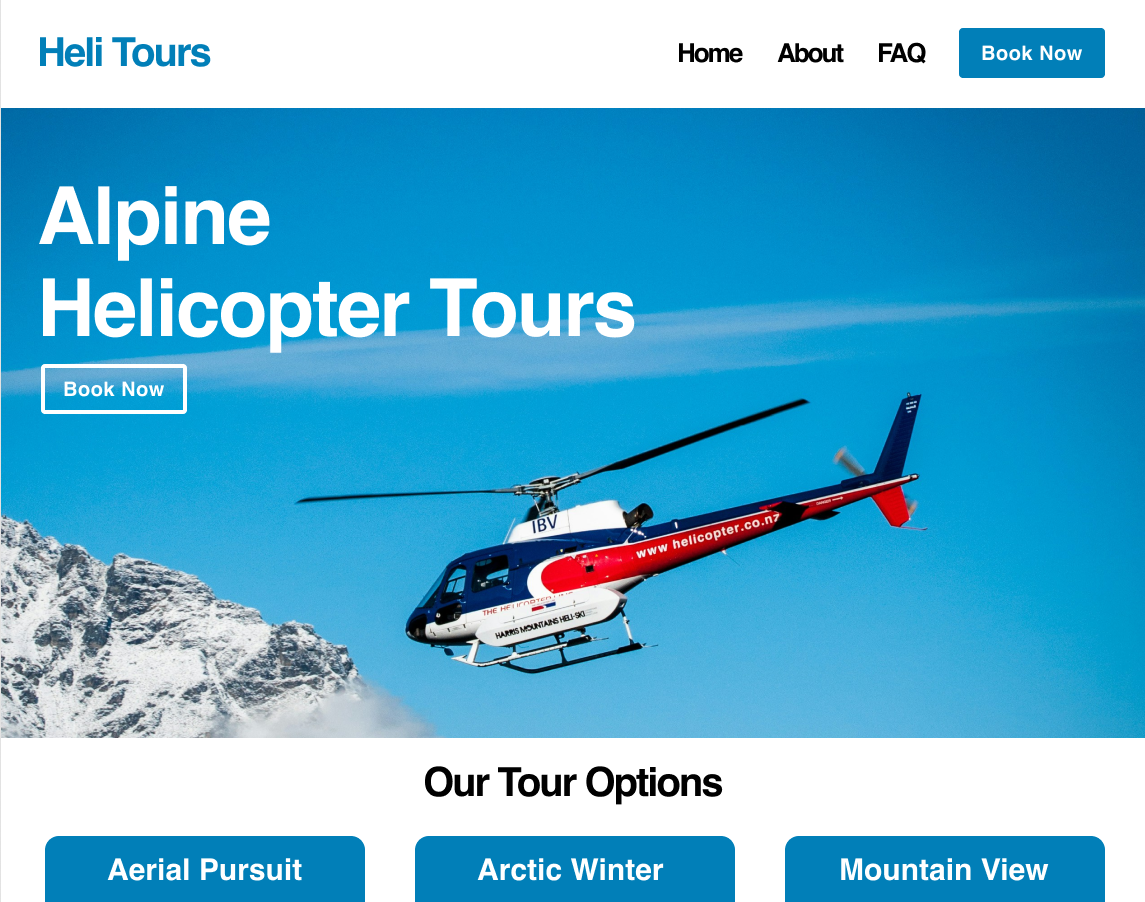
Photos help customers visualize the experience before they book. Real, high-quality images build confidence and reduce uncertainty, especially for first-time visitors.
Strong visuals communicate what the experience actually feels like and help set expectations before someone commits. When paired with clear descriptions and pricing, photos become one of the most powerful tools on your website for turning interest into action.
Trust, Safety, and Legitimacy
Before booking, customers want reassurance that your business is legitimate and accessible. This is where foundational trust pages come in.
Your website should clearly include:
- an About Us page that explains who you are
- an easy-to-find Contact page
- visible reviews or testimonials
These elements reduce hesitation, improve conversion, and signal credibility to both users and search engines.
Baseline SEO and GEO So You Can Be Found
Even the best-designed website won't perform if people can't find it. Every tour operator website needs baseline SEO and location-based optimization in place.
That includes:
- clear page titles and descriptions
- location-specific language
- pages aligned with how people search for tours and activities
We've covered this in more depth in our SEO and GEO guides, which are worth reviewing if you want to improve how your site appears in both traditional search and AI-driven discovery.
Building on the Foundation Over Time
Once the core pieces are in place, your website becomes something you can build on rather than constantly fix. From there, operators often expand into more advanced tools and strategies, such as analytics and tracking, blogging, or creating offering-specific pages designed to rank for individual activities or locations.
These efforts work best when the underlying structure — especially booking and site clarity — is already solid.
Final Thoughts
A strong tour operator website isn't about chasing trends or adding more features — it's about removing friction. The goal is to make it easy for customers to understand what you offer, trust your business, and book without hesitation.
When those fundamentals are in place, everything else becomes easier. Marketing performs better. SEO efforts compound over time. And you'll see sales increase with less manual intervention on your part.
If your website checks most of these boxes but the booking experience still feels clunky or disconnected, the issue is often the system behind it. BookingTerminal was built to integrate cleanly into operator websites and make online booking simple and reliable without unnecessary complexity.